Consequences of Prohibition
Drug War Issues
Politics & Advocacy
Drug reform-related state-level initiatives were a mixed bag on Tuesday.
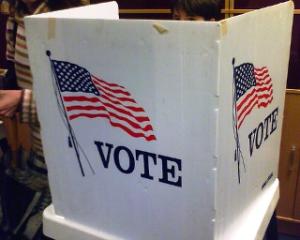
On Election Day, voters in four states weighed in on drug policy-related ballot measures, and the results were mixed. Efforts to roll back marijuana legalization in Massachusetts and end the use of the initiative process for drug reform in Idaho both failed. But regressive measures to up fentanyl penalties in Colorado and symbolically go after drug cartels in Arizona both passed.
In Houston, voters overwhelmingly approved a municipal initiative to make misdemeanor marijuana possession the lowest law enforcement priority and ban no-knock raids on Tuesday by a vote of 71 percent to 29 percent. And in Virginia, voters passed a constitutional amendment automatically restoring voting rights to people with felony convictions upon release from incarceration (an issue that isn't limited to drug policy, but affects it).
Here's what voters decided on the initiatives Tuesday:
Massachusetts – Roll back commercial marijuana legalization and home cultivation – DEFEATED
The Question 8 ballot question effort to repeal legal marijuana sales and home cultivation got stomped on Election Day, with unofficial results Wednesday morning showing 75.6 percent voting no and only 24.4 percent voting yes.
"Voters told an out-of-state effort that wanted to dismantle a decade of work and replace progress with restrictive policies, 'No'," said Ryan Dominguez, chair of the No on 8: Stop the Repeal campaign, in a Wednesday statement published by Talking Joints Memo.
Question 8 would have repealed key parts of the state's law legalizing recreational marijuana. It would have eliminated licensed retail sales and commercial production of marijuana, while still allowing adults 21 and older to possess and transfer small amounts. It would have also recriminalized the home cultivation of marijuana. The state's medical marijuana program would have remained in place.
Backed by the leading marijuana prohibitionist organization, Smart Approaches to Marijuana (SAM), the initiative campaign ran into strong headwinds in the Bay State. Key political figures, including Gov. Maura Healey (D), said they would vote against it.
"We've got to keep recreational marijuana here in Massachusetts. It's an important industry, the cannabis industry, and I hope the voters keep cannabis," Healey said in a radio interview.
Polling ahead of the vote consistently showed Question 8 losing by a wide margin, and that is exactly what happened on Tuesday.
Arizona – Label drug cartels terrorist organizations – APPROVED
On Election Day, voters handily approved Proposition 317, a largely symbolic measure that will officially declare that drug cartels are terrorist organizations and require the state Department of Homeland Security to do "everything within its authority to address the threat posed by drug cartels." With all localities reporting, unofficial election results Wednesday morning had the measure winning 57 percent to 43 percent.
The initiative defines a drug cartel as an association of people whose members engage in drug trafficking, human smuggling, or any act of terrorism. It defines a threat as anything designed to violate, harm, or disturb individual rights or the public welfare.
The Prop 317 vote took place in the context of the Trump administration's extrajudicial killing campaign, in which the US military has blown up more than 70 alleged drug trafficking boats in the Caribbean and Eastern Pacific without warning, labeling the mostly unnamed sailors as "narcoterrorists". But the initiative actually mirrors legislation to the same effect which was passed by the Republican-led state legislature in 2023, only for Democratic Gov. Katie Hobbs to veto it. Republican lawmakers approved the initiative for this year's ballot last year.
"Labeling drug cartels as terrorist organizations to deploy state resources is not a real solution and is not a state function," Hobbs wrote in her veto message at the time.
But Arizona House Speaker Steve Montenegro said he supported Prop 317 because he believes it will help law enforcement agencies go after the drug cartels.
"Number one, it makes sure that our law enforcement agents across the state can use every tool, every resource possible to them to combat this terrorism coming across the border," he said. "We also want to send a message to these terrorists, these organized crime entities, that Arizona is not a place that is open for your visit."
Colorado – Increase fentanyl penalties – APPROVED
Voters narrowly approved Proposition 132, which will create harsher penalties for possession and distribution of fentanyl, a drug linked to hundreds of deaths in the state annually in recent years. According to unofficial results Wednesday morning, the measure garnered 52.7 percent of the vote, with 47.3 percent opposed.
Under current state law, possession of more than one gram and up to four grams of a substance containing fentanyl is generally a Level 4 drug felony; the initiative raises that offense to a Level 3 drug felony. Possession of one gram or less, generally a misdemeanor now, becomes a Level 4 treatment-mandated drug felony, with eligibility for court-ordered treatment. The thresholds refer to the weight of the mixture, not just its fentanyl content.
The initiative will require prison sentences of eight to 32 years for distribution of any amount of a substance containing fentanyl, according to the state's ballot analysis. It also removes reduced-penalty options for distribution cases involving "Good Samaritan" actions, such as reporting an overdose, and limits judicial discretion.
Advance Colorado, a conservative advocacy group that works to "push back on progressive policies," sponsored the initiative. A relatively small number of Republican elected officials supported it, arguing that the new penalties would reflect the seriousness of dealing fentanyl and that it would protect communities combating addiction and overdose deaths.
Opponents included advocacy groups such as the Colorado Criminal Justice Reform Coalition and the League of Women Voters, as well as the Colorado Education Association and the Colorado Nurses Association, along with Republican and Democratic elected officials across the state. They argued that it would divert law enforcement resources to low-level, less important cases and that it is a distraction from the lack of drug treatment funding in the state.
Idaho – End the use of the initiative process as a means of changing drug policies – DEFEATED
Uncertain that they could continue to maintain marijuana prohibition by leaving it up to the voters, the state's Republican lawmakers put a legislative initiative on the ballot asking voters to give up their authority to change drug policy through the initiative process. In no uncertain terms, voters rejected that power grab, with the measure, Grant Legislature Exclusive Authority and Prohibit Citizen-Initiated Measures on Marijuana, Narcotics and Psychoactive Substances Amendment (HJR 4), losing by a two-to-one margin. With all localities having reported, unofficial results Wednesday morning showed the measure losing 66.3 percent to 33.7 percent.
The measure passed the House 58-10 and the Senate 29-6 after proponents claimed it would protect the state from being influenced by "rich weed companies."
"The proposed constitutional amendment ensures that out-of-state weed barons are not able to hijack the Idaho ballot initiative process and legalize marijuana," argued Blaine Conzatti, president of the arch-conservative Focus on the Family-allied Idaho Family Policy Center. "The adoption of HJR 4 would reserve those decisions for the people of Idaho acting through their elected representatives."
But Paul Armentano, deputy director of the National Organization for the Reform of Marijuana Laws (NORML), begged to differ. In an op-ed published in Marijuana Moment, he characterized the effort as anti-democratic.
"House Joint Resolution 4 seeks to amend the state constitution so that voters no longer have any say in determining Idaho's drug policies. That's not anti-marijuana, that's anti-democracy," Armentano wrote. "The message behind this resolution cannot be clearer. State officials don't trust voters to do their bidding on the marijuana issue."
In a Wednesday blog post, Armentano took a victory lap: "HJR 4 wasn't anti-marijuana; it was anti-democracy," he said. "In a healthy democracy, those with competing visions on public policy vie for voters' support. But Idaho lawmakers know that they can no longer make a rational case for the state's prohibitive and punitive marijuana policies – policies that are out of step not only with most other states, but also with most Idahoans."
"Idaho voters have scored a major victory for citizen-led advocacy and common sense by soundly rejecting HJR 4," Adam J. Smith, executive director of the Marijuana Policy Project, said in a Wednesday statement.
The Republican-dominated state legislature has fended off marijuana reforms for more than a decade, with not even medical marijuana getting through. Likewise, no marijuana legalization initiative campaign in the state has ever qualified for the ballot. Still, lawmakers and supporters of HJR 4 are determined to keep voters from making a choice they disapprove of.
This work by StoptheDrugWar.org is licensed under Creative Commons Attribution-ShareAlike 4.0 International


Add new comment